Skip content?

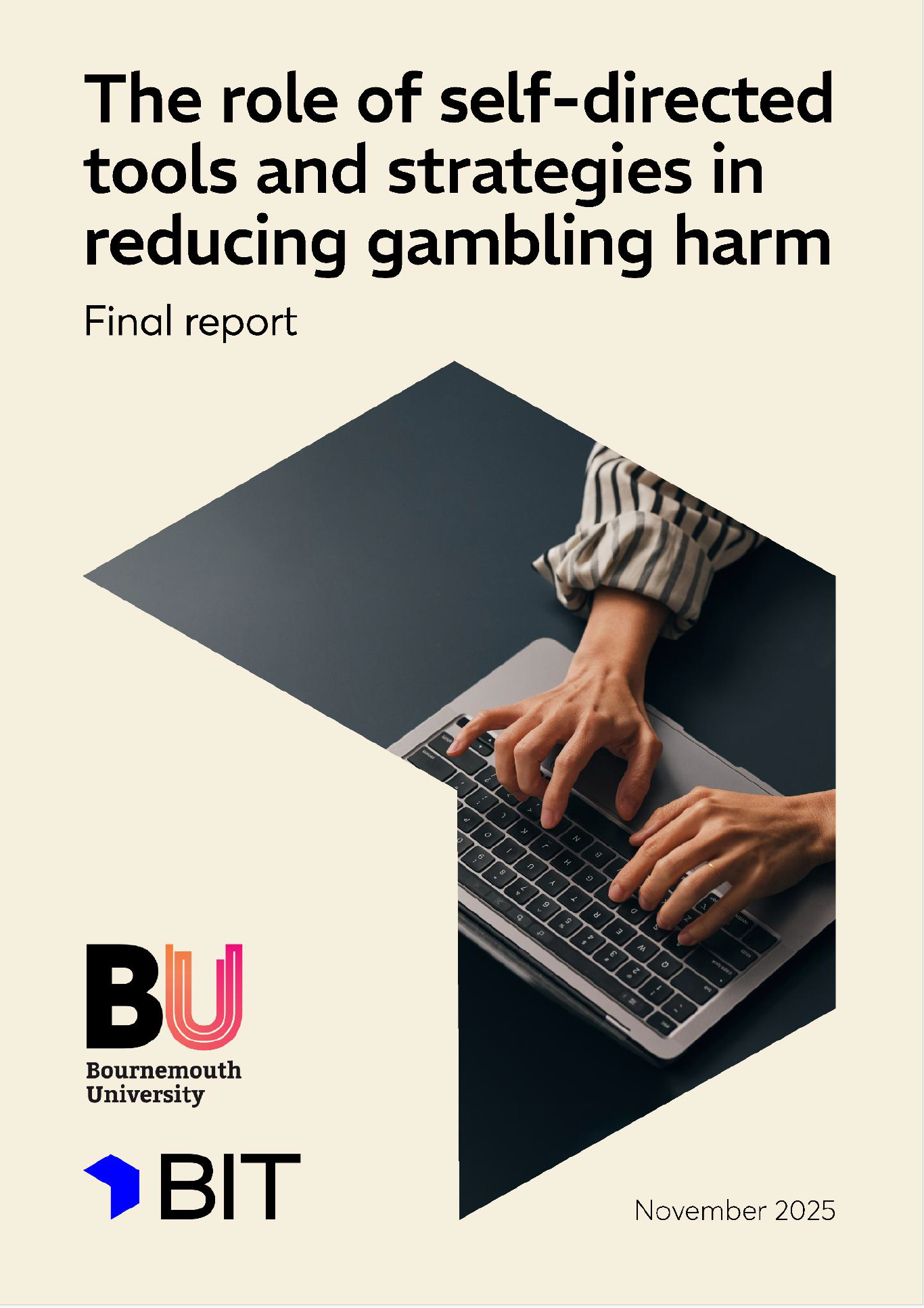
The role of self-directed tools and strategies in reducing gambling harm: Final report

Author: Behavioural Insights Team, Eleanor Collerton, Bálint Dercsényi, Akila Ranganathan, Dr Craig Johnson, Ruth Persian, Libby Woodhouse, Andreea Faluvegi, Dr Reny Kiryakova, Professor John McAlaney, Dr Emily Arden-Close, Dr Reece Bush-Evans Published: January 2026
Summary

This report investigates the systemic, behavioural and design-based barriers people face in taking up self-directed tools and strategies and develops actionable recommendations for sector stakeholders.

Topics covered

  • Discusses 10 cross-cutting barriers with self-directed change
  • Investigates three primary co-designed solutions
  • Recommends broader behaviourally informed strategies

Key findings

  • The main issue is not a lack of tools or strategies but rather a complex and fragmented prevention and support ecosystem that can be difficult to navigate effectively.
  • The main challenges when starting to use tools and strategies are limited awareness, stigma, and not recognising the need for help.
  • The main challenges while using tools and strategies are selecting unsuitable support, poor tool design and external triggers.
  • The main challenges with longer term support are adjustment challenges and unexpected ups and downs and recovery often framed as a one-time event.
  • The recommendations involve minor adjustments to existing effective resources.
Is this page useful?

However you’re feeling right now, we’re here to help.

The National Gambling Support Network helps people struggling with gambling, and people who are worried about someone else’s gambling.

Call or chat online to an advisor, and speak one-to-one for confidential advice, information and support.

Delivered by GamCare.

Available 24/7 • Great Britain only

Find support in your area Call 0808 8020 133